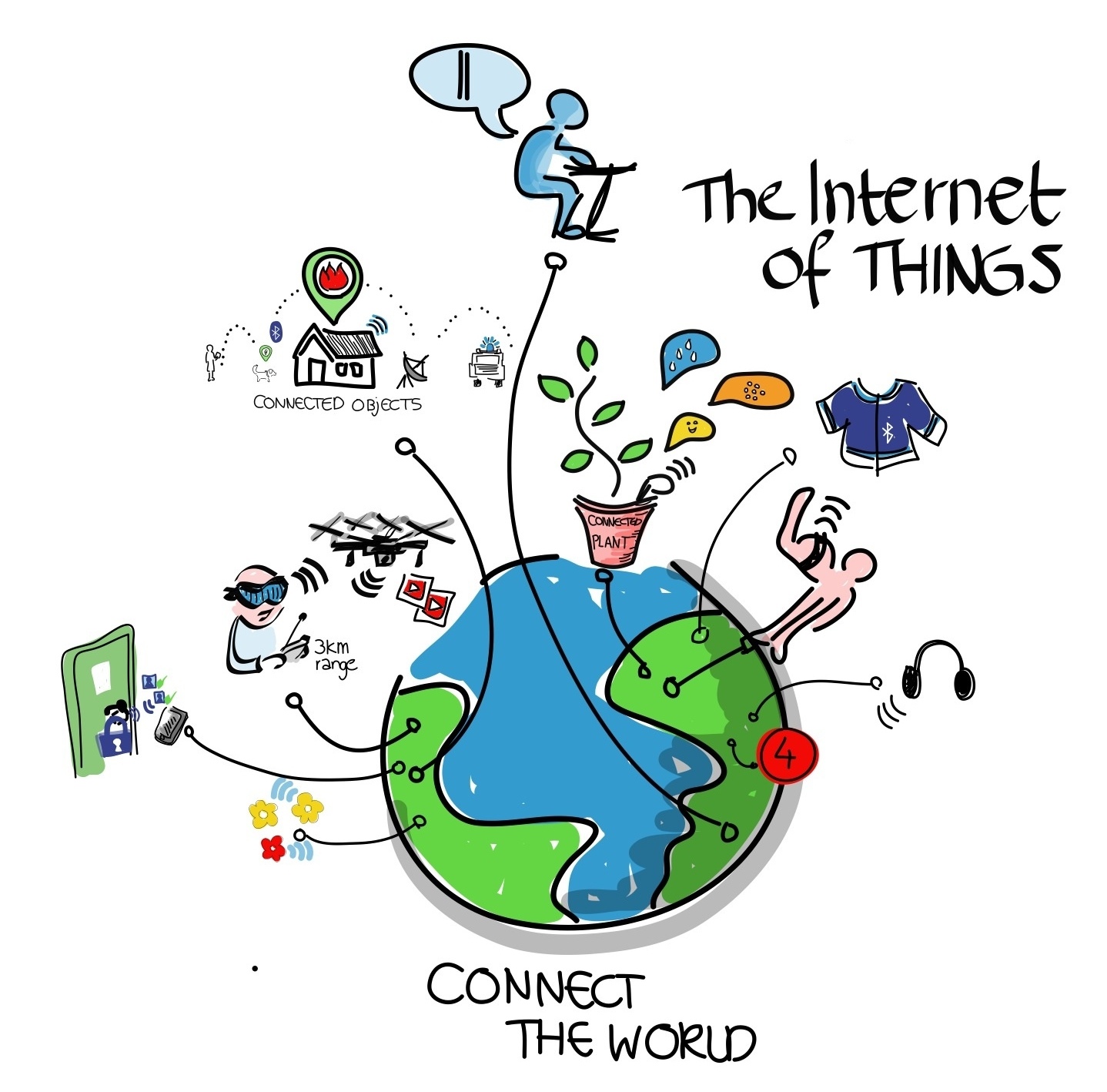
Last week I was reading "Building the Internet of Things" by Maciej Kranz.
Few of my takeaway I want to share with you from that book.
We are inundated with the hype around the Internet of Things today, which Immediately needs to be practical to derive tangible benefits tomorrow.
Today the convergence of information technology and operation technology has brought us to Connected Enterprise. this foundation leads us to the future of Manufacturing is based on standard unmodified Ethernet and open system.
Here I will not talk about the numbers (Millions, Billions of dollars). because that droves me to nothing instead it leads me to count zeros behind the number. (hahaha !!)
So let's talk to straight application and about author experience to the Real World.
IoT start with smart assets that are securely networked over an open, standard network(Ethernet). Its full potential value by complementing smart,networked assets with contemporary technologies such as scalable computing, Information Management, analytics and mobility to create high value outcomes such as zero downtime and reduced energy consumption. The connected enterprise accelerated by IoT technologies delivers unprecedented benefits in productivity, sustainability and global competitiveness.
Today the pace of change is more than a constant, It's the new status quo. So how does your business survive in this environment? The winners in this new era will recognize the changes occurring around us and be willing to adjust and re-learn, over and over again. They are Generation IoT.
If they embrace the open standards, open collaboration, open communications, and open, flexible business models, and assemble a comprehensive partner ecosystem to build and deploy agile, flexible business solutions.
One of the other main examples of IoT is mass customization - the ability to customize mass-produced products to each individual buyer's specifications. IoT makes it far more practical and cost-efficient. Latency isn't a problem. Information can be shared in real-time between every element in the supply chain.
customer order a car or a suit or anything else, specify the desired components. and have it built or assembled as ordered. Each order rolls off the assembly line customized to that individual buyer. with IoT mass customization is starting to happen.
One of the major benefits from IoT with an example is Harley-Davidson's strategic business outcomes from IoT is that they pulled together key people from both IT(mars 😎) and OT (Venus😀) for talking to each other.(which is very useful case study you need to read whole book)
IoT History:
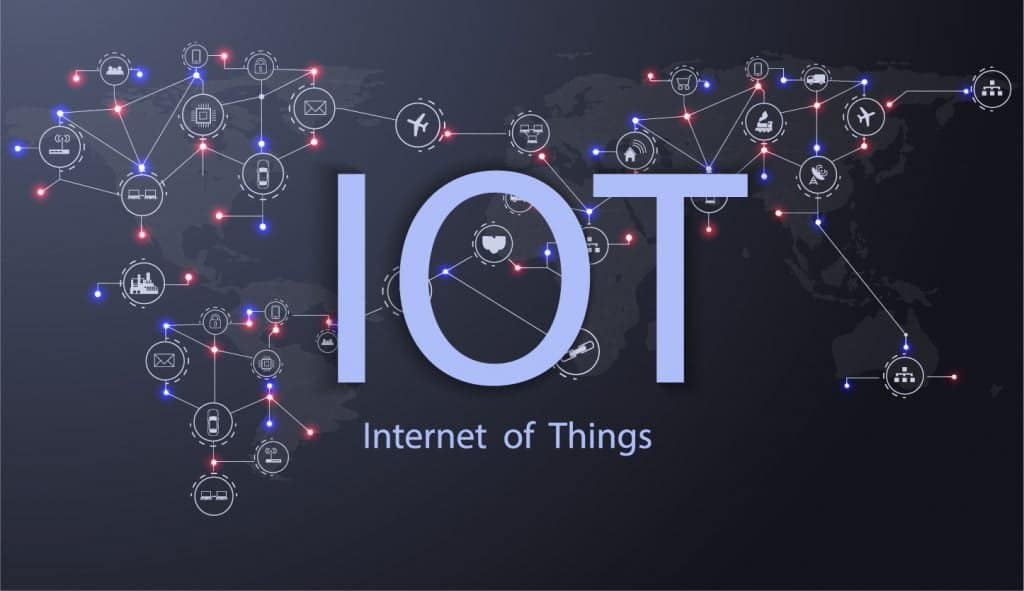
IoT is not actually new. It has been around for years, in various forms. Banks run large, distributed automated teller machine networks. Retailers operate large POS networks. Manufacturers connect thousands of devices to monitor and manage production in M2M networks. Utilities deploy connected sensors and meters to enable everything from customer billing to maintenance troubleshooting.
An IoT term might have been coined in the late 1990s to describe the emerging RFID networks.
we now have a robust standard-based global networking infrastructure and a myriad of connected devices from all sorts of sensors, meters, actuators, to cars buses robots drills MRI machines office buildings entire cities even garbage cans those assets can not only communicate but also generate and often process data and interface with a mind-boggling array of applications.
as previously noted IoT isn't exactly new, having been around in different forms for more than a decade.
The convergence of information technology and operational technology improving communication and efficiency.
Use Cases:
- Transportation and logistics use case :> preventive predictive maintenance
sensors throughout the fleet's vehicles continually report on the state of each vehicle. when sensors indicate signs of a likely problem such as suddenly dropping oil pressure or heat buildup in the engine dispatchers and drivers are alerted to the problem and can take corrective measures. Vehicles spend less time on the road and get back on the road faster, without the major disruption to delivery schedules. that means vehicles spend more time generating revenue and less time out for repair.
- Oil and Gas exploration and extraction use case :> Smart analytics.
On oil rigs which are complex factories and cities fused together and precariously planted in the middle of an ocean, smart analytics can be a lifesaver.
- Smart city Initiative use cases :>
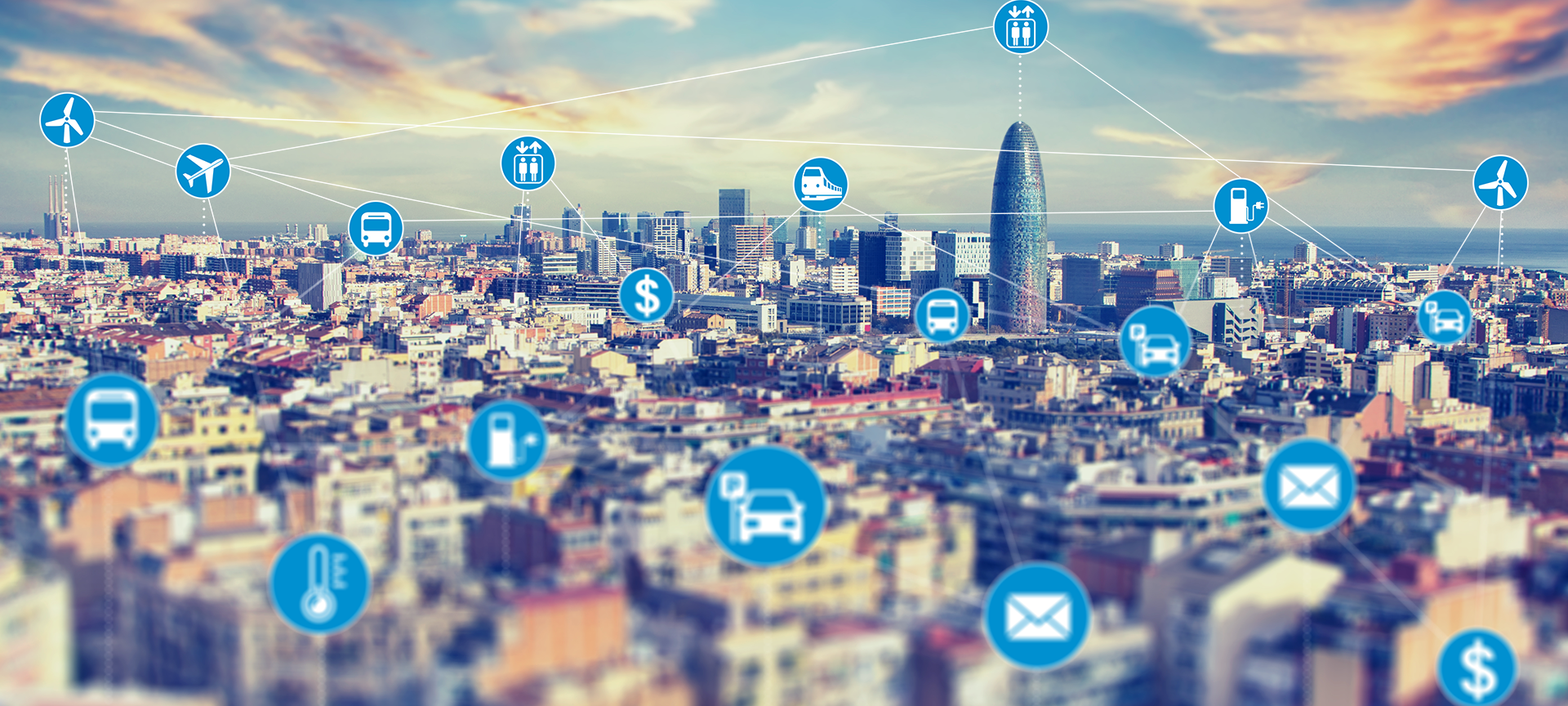
The smart city in the world today Barcelona wants to efficiently provide services at multiple levels to all of its citizens and businesses not harnessing ICT. Barcelona also initiated what it calls "City OS ", an operating system that will sit atop its established network of sensor technology to collate and analyze data collected across the network. But where exactly does this payback in a smart city come from? let's drill down a bit.
Parking is typically a second -or third-tier revenue source for most cities which means it's very important. So How it works, Drivers use a mobile phone to find and reserve a parking spot city batter utilizes the available parking spots and can apply variable pricing for rush hours and non-rush hours.
Lighting is another where it will only on where there is traffic unless it will turn off.another which catches your surprise is Automated Garbage collection. the vehicle only set route when the bins are almost full (Which I was thinking in Covid-19 LockDown).
and the final one is a Mobile ad on buses. which includes location-based advertising. Mobile advertising platform which is provided as managed service with a monthly fee or revenue sharing model.
The Growth of IoT
IoT is transforming the value proposition and business models for vendors. It allows them to move to recurring business models, for example charging customers for the time of operation of the machine versus the traditional approach of selling the device itself. It creates new revenue streams by allowing the manufacturers and service providers to monetize the data and enhance the existing offering with new Service Level Agreements.
You can not do IoT alone:
"Build an ecosystem of partners; learn and co-develop with them no single vendor can deliver a complete IoT solution for every customer. Similary It doesn't make sense for an organization to develop a custom IoT solution for itself. You'll burn too many resources reinventing multiple wheels that have alreadt been invented. At a minimum, you're better off developing your vertical solution based on proven horizontal modules, architecutures or platforms that you can readily adapt. Going alone is too costly and risky"

several vendors already offer IoT application enablement capabilities that combine cloud-based asset management and business intelligence services. which combines cloud-based asset management and BI service with an IoT fog controller.
One more manufacturing case study is Pepsico, which collaborates with Rockwell automation.
Pepsico was experiencing low plant productivity from an ineffective IT/OT network and inefficient use of capital. Pepsico implemented IaaS a unified virtual platform, industrial servers, standard network infrastructure, and centralized support. This leads to Improved reliability of the manufacturing system. reduce downtime and support costs. Streamlined communication through remote monitoring.
Here is another case study from that book:
A dairy company in India operates 150 ice cream stores. A startup in India successfully applying IoT to address a use case that may not be relevant in the US or Europe. thing is Power outage happens in India they need to use a backup generator to ensure ice-cream remains safely frozen during an outage. When the outage occurs the company stood to lose what could amount to several thousand dollars' worths of ice cream per outage due to melting and likely spoilage.
So dairy company used multi sensors devices were deployed in the fridge where ice cream is stored. These sensors automatically connect to the network and can be monitored remotely via software running in the cloud. If the temperature in a fridge goes up 1 to 2-degree system notify the manager on duty. If the issue isn't fixed alert can be reached to the CEO level. if this SMS/ email alert missed it also sends voice calls to them to take action. If the person doesn't;t know what to do with this type of alert system can suggest actions, This type of investment, they have a return of 5 times its original investment.
Case study on Predictive Analytics:
Problem - Lack of visibility in product use leads to downtime for the customerAction - Capture and analyze data collection from robotsThe result - Identify and remedy problems before they occurNear-zero downtime.
Case study on Predictive Maintainance:
Problem - Expensive equipment in harsh environmentsEach out of service truck costs $2 million per dayAction - Automated 900 giant dump trucks with 92 sensors in every truckThe result - Gained the ability to analyze 4.9 terabytes of data per dayMaximized equipment life and optimized efficiencies
Many industries are adopting IoT which are:
In Agriculture, Health care, Retail, Sports and Entertainment, utilities, Building Automation, Education, Airline Industry, The Military(which has awesome case studies)
Few paybacks which I and author both have seen is:
Four Fast Payback From IoT:
- Reduction in costs
- Revenue generation
- Streamlined business processes
- Increased uptime
- Development of new product and service and support customer
- New insight into product usage and customer information
- New Go-to-Market strategies
- Data as a service
- Remote monitoring
- Connected Operation: Join/link devices, sensors, meters to a network
- Remote Operation: Monitor, Control, Asset management
- Predictive Analytics: Identify, understand and immediately take the best action
- Predictive Maintenance: Increase uptime and productive hours.As the IoT based economy drives trillions of dollars in economic growth, there will be a worldwide scramble for the same IoT capable staff.
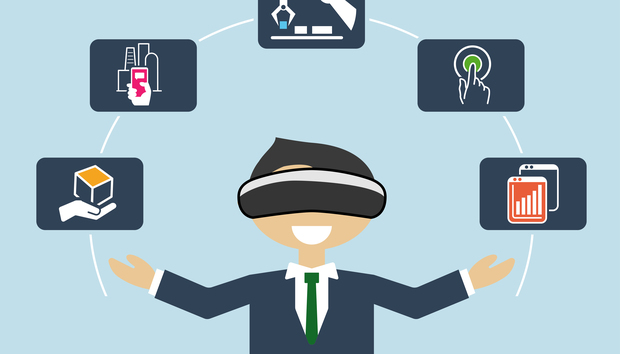
Another industry is Virtual Reality(VR). We've all seen the VR goggles that are supposed to be the next big thing in gaming, but we can also Apply them-- together with game engines in the IoT business world. Think about training your employees and contractors on how to operate a piece of machinery, evacuate a mine, or perform a safety procedure, all from the lab before they go into the field. You can check more VR IoT
 |
Augmented Reality: Control engineers can use Google AR or Microsoft Halo to capture cycle times, vibrations, and other operations and maintenance data or diagnose problems without physically holding a diagnostic tool in their hands. Don't need to carry equipment, and are still able to acquire the data they need. Think of it as having remote experts diagnosing problems, not by using today's remote camera but by being digitally present on that oil rig, seeing what you see. the software can even overlap the step by step instructions for you on how to fix the device.
Robots: It is being used for inspections and repairs in hazardous environments such as highly toxic tanks, The robotics field is evolving rapidly and new classes of robots are going mainstream.
 |
Artificial Intelligence(AI): Intelligent robots will become our co-workers, partnering with us on automated tasks, and contributing by making complex intelligent decisions. ML and DL techniques are enabling all kinds of new IoT applications from video analytics and self-learning networks to real-time predictive analytics of machinery.
one of the key lessons I learned from the author is,
For IoT , Prepare for a journey. not a one time event," and then be ready to reinvent yourselves, your entire industry every three to seven years.
In short, Don't reinvent the wheel and learn from IoT peers.
The industry is still young and evolving, so many best practices haven't yet been validated. and everyone is still learning and will continue to do so for years to come. So we are moving to uncharted territory, experimenting, and taking risks.
Cleary, IoT touches all aspects of the customer/partner relationship. In the IoT economy, you won't always be either the provider or the customer. The bi-directional nature of IoT impacts the buying as well as the selling. the use as well as the making and distribution of products and services. In effect, IoT impacts the entire value chain. so I would rather say
Welcome to Generation IoT
feeew!! So as you read above which is a very small part of the book. as Maciej said its a partner and collaborative base ecosystem so How would you like to join with me to create more value in society ??
would love your comments!
it was nice learning, cheers to author!!
ReplyDeleteThank you Ravi. Hope you find many insights and new learning.
Delete